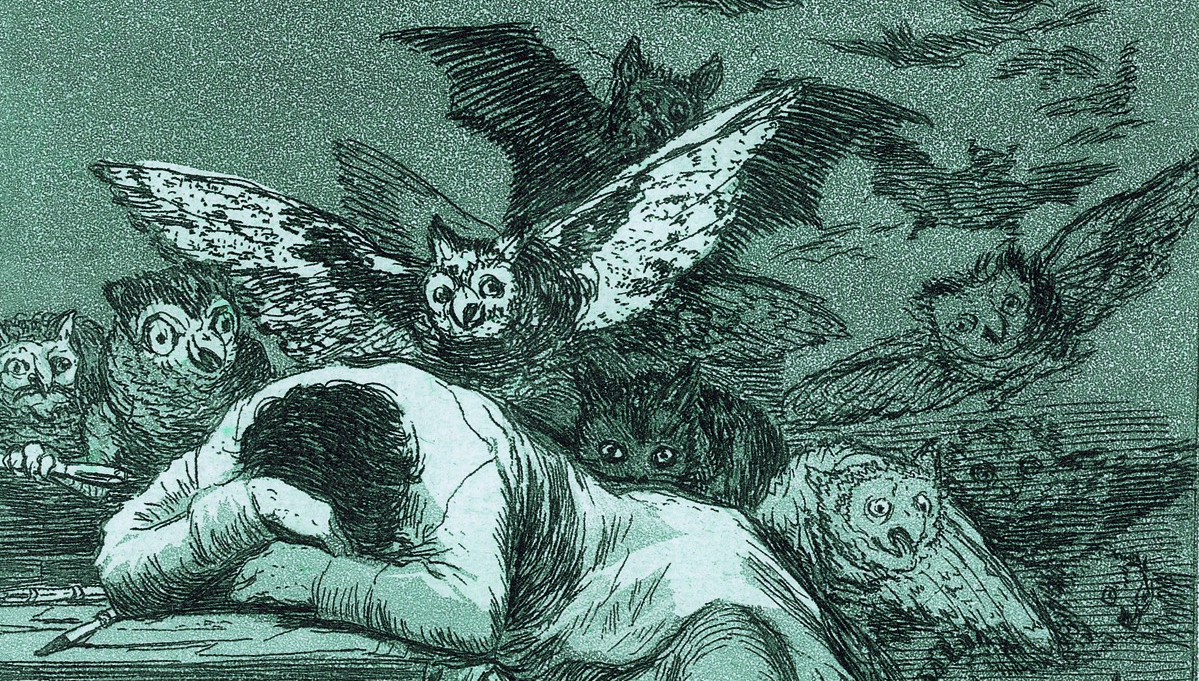
In 2026, Hungary and Serbia voted out their autocrats despite years of state propaganda. This piece asks what it will take for Hungary to rebuild a democratic public space.
In the 2025 Democracy Report, the V-Dem Institute, which measures democracy around the world with a rigorous academic method, ranked Hungary and Serbia among Europe’s leading “stand-alone autocratisers”. In both countries, the quality of democracy had declined sharply over the previous decade.
In 2026, the same two countries became Europe’s top democratisers. In Hungary, Péter Magyar’s Tisza party defeated Viktor Orbán’s Fidesz in the April election. Six months later, in a snap election in October, Serbia’s Student List defeated Aleksandar Vučić’s Serbian Progressive Party.
In both Hungary and Serbia, the opposition won despite the ruling party’s overwhelming dominance of the media.
These victories are especially striking because both countries had become important examples of “informational autocratisation” (Hungary more so than Serbia), a process in which hybrid regimes rely heavily on manipulating what voters see and hear to stay in power. But this piece primarily focuses on Hungary, where the dynamics of informational autocratisation have been particularly pronounced.
This is reassuring. It shows that no regime can be omnipotent in shaping public opinion – there are limits to the efficiency of state-sponsored disinformation and institutional brainwashing, even in parts of Europe with less established democratic traditions. It also reminds us to be nuanced and to distinguish between hybrid regimes (or electoral autocracies) – which can be defeated in elections – and more advanced, full-fledged autocracies – which cannot. For once, the terminology that political scientists obsess over has a practical use.
Of course, we should draw lessons from these elections – as we have done elsewhere, even if some seem banal (engage more with voters, focus on domestic issues) and others are hard to apply to the rest of Europe today. In Hungary and Serbia, the opposition was able to win with an anti-establishment, anti-incumbent message. In Western European countries such as Germany and France, the same messages come from the far left and the far right rather than from democratic forces.
At the same time, it is important to discuss what these elections mean for the long-term sustainability of democracy.
In both countries, the opposition won despite a decade or more of institutionalised propaganda campaigns that portrayed NGOs and “Sorosites” as domestic threats and “pro-war” Western countries, Ukraine and migrants as external ones. While some segments of both societies – though not all – have grown tired of the constant stoking of hatred and fear, these campaigns have left a deep mark on both societies, and their impact will not disappear overnight.
Polls in Hungary, for example, indicate high levels of prejudice, strong anti-Ukrainian sentiment and a pronounced conspiracy mentality – tendencies that predated the Orbán regime and that its propaganda machine exploited very effectively.
Re-creating a democratic public space after long years of effective state-sponsored disinformation, during which citizens were encouraged to see the world through the lens of conspiracy theories, poses three challenges.
The first is social, as discussed briefly above. How does a society conditioned to accept disinformation recover from it? The second challenge is institutional, and the third is political. In the information sphere, the institutional challenge is how to rebuild the institutions that sustain serious, reasoned, fact-based public discourse. Public service media are the most visible part of this process. In Hungary, according to the Republikon Institute, the public broadcaster’s news coverage has improved since it relaunched its news programme in August, compared with the coverage it offered under Viktor Orbán. The search for a new chief executive of the public broadcaster is also under way. Competition is strong: 27 people applied, and 14 of the applications were valid.
The Independent Public Media Board, the new body that oversees public media, heard the candidates in public and streamed the hearings live. We will see whether the new institutional arrangements can withstand the political pressures that will inevitably emerge over time. One reason for hope is that the Hungarian government has already taken some important decisions about the wider information environment, including a law passed in June that bans hate-inciting political advertising on billboards.
The political challenge lies in the nature of populist politics. Péter Magyar is at least as adept as Viktor Orbán was – perhaps even more so – at shaping public opinion, capturing the public imagination and playing on voters’ emotions. In a November poll than 60 per cent support in most polls. Hungary was a “spin dictatorship”. It is now becoming a “spin democracy”, with a more democratic institutional environment but a similar inclination to centralise and control the political narrative. Some of this is inevitable in democratic politics. Yet the temptation to exert too much control over public debate may grow as the government’s term progresses and it has to take unpopular measures.
Narratives matter in politics. If you have the power to frame events as you wish, the temptation to distort reality and paint a more flattering picture of your own performance is all the greater.
We have to be honest – these are the usual rules of the political game. Politicians are neither academics nor experts nor fact-checkers, and Péter Magyar is no exception. They want to persuade the public. What matters, of course, is how far they are willing to distort the truth to do so. None of these challenges is easy to address, and in an era of democratic recession, the global momentum still seems to favour a slide back towards autocracy.
In a cautionary essay in the Journal of Democracy, Princeton constitutional scholar Kim Lane Scheppele draws on international experience, including that of the United States, to argue that democratic turnarounds today rarely last. Defeated autocrats can retain enough popular support to return to power before their successors have had time to rebuild democratic institutions. Scheppele asks whether even determined reformers can, within one or two electoral cycles, “rebuild democratic institutions that can survive another autocratic onslaught.”
When it comes to re-creating the conditions for democratic debate, it is particularly difficult to find international examples to follow. Private media, for example, face an increasingly severe funding crisis around the world. The public service media model is under strain in many countries. In Germany, for example, the AfD, which leads in the polls, is campaigning to defund and radically transform the public broadcasters, portraying them as the main instruments of political censorship and as sources of propaganda and disinformation. Traditional media more broadly are also in crisis.
Anti-establishment movements, particularly far-right parties such as France’s National Rally, have learned to bypass traditional media by building large followings of their own on social media or by reaching voters through alternative online outlets.
Hungary has attracted far more international attention than its size or geopolitical weight would suggest. What happens there will therefore matter both to Europe and to the wider world. Hungary’s attempt to rebuild a democratic media environment will also hold lessons for others trying to do the same.
Voters themselves often look for political myths and fairy tales and expect their leaders to sustain the alternative realities those stories offer. Harsh realities are often less reassuring than the stories we wish were true. Ultimately, though, the success or failure of a democratic transition – including the reform of institutions such as the media – depends on voters’ ability to keep the process on a democratic track and to punish leaders who fail to do so. Hungarian voters, or at least some of them, expressed their discontent with state propaganda in 2026. They will need to hold future governments to the same standard. Otherwise, the cycle of informational autocratisation could begin again.