A conversation with Spanish-American neuroscientist Rafael Yuste on why Europe must talk about neurorights.
In George Orwell’s 1984, Winston Smith lives in a world where the state controls language, rewrites history and manufactures truth. Yet even in this totalitarian fictional nightmare, one final refuge appears to remain: “Nothing was your own except the few cubic centimetres inside your skull.” Today, in our real 2026, that refuge is becoming a question for neuroscientists, technology companies, military strategists and political institutions.
Private capital is pouring into neurotechnology. Companies such as Elon Musk’s Neuralink promise extraordinary things – from restoring communication to people with paralysis and treating neurological disorders to developing new ways for the human brain to interact with machines. But beyond medical applications lies a potentially much larger market: cognitive enhancement, consumer neurotechnology and the integration of human mental activity with artificial intelligence. And that introduces an entirely new dimension of power.
For decades, the digital economy has been built on collecting information about human behaviour. The technology now in the making moves beyond predicting behaviour towards interpreting and potentially influencing the neural processes from which our thoughts, emotions and decisions emerge. NATO already recognises the cognitive domain as an arena of strategic competition. Geopolitical competition may soon concern not only who controls information, but who controls the technologies capable of influencing the human mind.
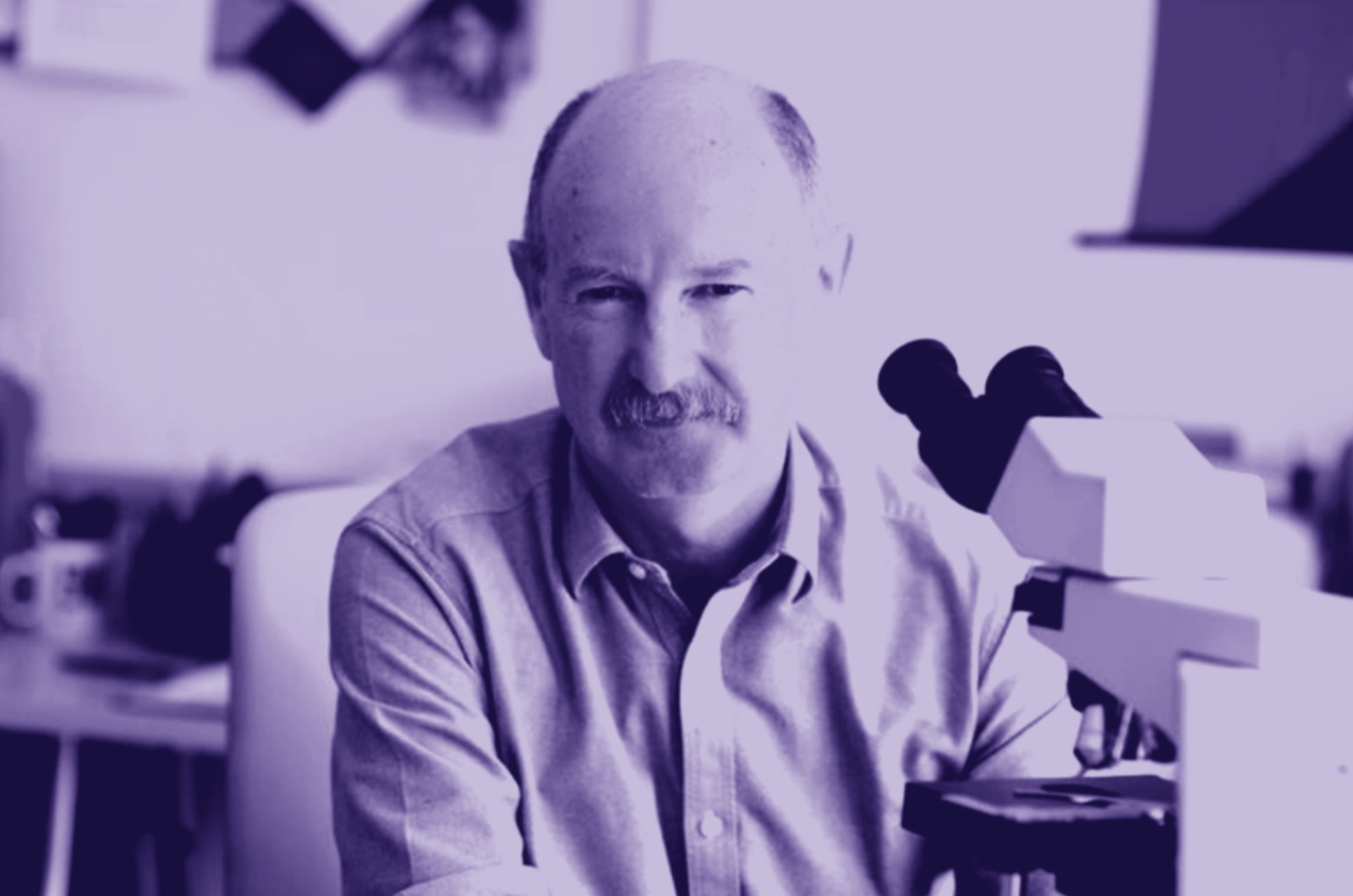
Professor Rafael Yuste, a Spanish neuroscientist at Columbia University and one of the leading figures behind the BRAIN Initiative, experienced what he calls his “Oppenheimer moment” in 2014, when experiments involving the precise manipulation of neural activity in mice confronted him with the possible ethical consequences of his research for humans. Through the Neurorights Foundation, he has spent years advocating that neurorights be included among basic human rights.
His campaign has helped inspire legislation in the Americas. In Europe, however, protection of the human mind remains largely absent from mainstream European political debate, preoccupied with technological sovereignty and its own economic competitiveness.
Yuste is no technological pessimist. He sees extraordinary possibilities for medicine, education and human development. But he insists that democratic societies must establish the rules before these technologies become ubiquitous. As he tells me in our conversation, we cannot leave technology companies alone in the cockpit, deciding where humanity is heading.
Ivana Dragičević: You have advocated for neurorights for a long time. They include mental privacy, personal identity, free will, fair access to cognitive enhancements and protection from algorithmic bias. If you look at the state of our democracy, why are these crucial today, given what is evolving around us?
Rafael Yuste: These five neural rights can protect essential aspects of the basic human condition that are not really well protected by current legislation or existing human rights. This has to do with the development of a new kid on the block, a new technology called neurotechnology: methods to access brain activity and to decode or manipulate it.
These methods were first developed in laboratories, like my laboratory at Columbia University in New York. Then there was a second phase in which they started to be used in clinics with patients who have mental or neurological diseases. Now they are starting to trickle into the marketplace, and the problem with the marketplace is that this technology is unregulated. To be completely clear, what you can buy today on Amazon are not yet very powerful things compared with those we use in laboratories and clinics. But there is a big push to make these methods more and more available and less and less invasive.
So you can imagine, in the near future, the possibility of wearing a helmet to decode your brain activity so that you can order an Uber mentally, without speaking or moving your fingers, just by thinking the words. This could lead to a huge erosion of mental privacy, because if you can decode the words we have in our heads, then this is the beginning of decoding mental activity. Mental privacy is what worries me the most. I think it is under attack right now with the possibility of wholesale decoding of language, for example. This has already happened in laboratories and clinics, but not yet in the market. We want to make sure that when the devices are sold, we will have protection.
Ivana Dragičević: What stage are we at with the technology we have?
Rafael Yuste: With the technology we have in laboratories, we can control and modulate all kinds of brain activity precisely. You can change the personality of a mouse, making it more fearful or less fearful, happier or sadder. People have been able to do that for 10 years. This year’s Nobel Prize in Medicine, awarded for optogenetics, recognised this work. So that is where we are. In the laboratory, you can already do that. In the clinic, sometimes. For example, some people with Parkinson’s have implantable brain stimulators. When the stimulator is turned on, the tremor disappears, but sometimes people’s personalities change. They may become more aggressive or less aggressive. Sometimes family members do not recognise the person and say, “What happened to Grandpa? Every time we turn on the device, he becomes a different person.” We want to make sure that when these technologies are used in society and in the market, they are well regulated. That is why I think it is a good idea to involve medical professionals, along with experts in ethics and bioethics and representatives of citizens, in panels that decide which devices can be sold on the market and which should be used only in clinics, or vice versa. They could decide that a device should be available to everyone at home and that we should try to make it affordable.
Ivana Dragičević: We already know about interdisciplinary fields like neuropolitics, which connect political science, neuroscience and psychology. They examine the brain mechanisms of how we act as people. But what you are describing is something else. How would you explain this further to European policymakers, given that it is not yet a matter of public debate?
Rafael Yuste: This is exactly what happens with a new technology. At the beginning, the only people who know about it are the scientists or engineers who create it. The problem with many technologies is that by the time policymakers want to regulate them it is too late, because the industry has already taken them up and they are being sold in the market. And once everyone has a device in their pocket, it is very hard to change that. With neurotechnology, what happened is that 10 years ago we organised a meeting of experts here at Columbia University. It included 25 people from all over the world representing BRAIN initiatives from many countries. That is where we proposed this agenda of neural rights. And for the last 10 years, I have been involved in spreading the word about this agenda all over the world.
Ivana Dragičević: Where are we now?
Rafael Yuste: We created the Neurorights Foundation, which has lawyers and legal experts both in the US and in Europe. European regulations, the GDPR and the AI Act, do not cover neurotechnology, because when they created these regulations, they did not know about neurotechnology. Meanwhile, we have been working with other countries on this side of the Atlantic, and I have good news: there are places where brain data is protected by specific laws. The first was Chile, which approved a constitutional amendment to protect brain activity and brain data. Then came the state of Rio Grande do Sul in Brazil, which also approved an amendment to its state constitution to protect brain data. After that, several states in the US approved laws. It started with Colorado, then California, Montana, Alabama, Connecticut, Vermont, Massachusetts and Maryland. Earlier this year, Canada also passed a regulation protecting brain data as sensitive personal data. So in all these places, which happen to be on this side of the Atlantic, your brain data is actually protected by law today. But in Europe, even though there are many documents, guidelines and potential ideas about how to regulate neurotechnology, as far as I know, nothing has happened. I think people tend to think that the GDPR is enough, but it is not enough. The GDPR only talks about biometrics, it does not talk about neurotechnology. And the AI Act also does not cover neurotechnology. So I think it is necessary for Europe to do something similar: propose or approve some sort of bill that will protect brain activity and brain data.
Ivana Dragičević: Today we talk a lot about cognitive resilience and information integrity, but brain rights still look like science fiction to some. How wide is the gap between what the technology can already do and what most of us understand about it?
Rafael Yuste: Our foundation did a study looking at 30 non-clinical neurotechnology companies in the marketplace, examining their consumer user agreements , that fine print that nobody reads, which you have to scroll through and click “OK” to turn on the device or download the software. It turns out that at every company we looked at, when the customer clicks “OK” and agrees to the policy, transfers ownership of all their brain data to the company in perpetuity. And in 29 out of 30 companies, when you click “OK”, you allow the company to sell your brain data to a third party, which by definition is not specified. We thought that was not OK. It is like the Wild West. There are devices that have not come onto the market yet, but they are getting ready. Apple, for instance, has patented AirPods, like the ones everyone uses, with an electroencephalogram recording device at the tip of the earbud. That means you could put these devices in your ears to listen to music, but at the same time they would record brain activity from the parts of the brain closest to your ears. In principle, you could use these devices to decode language. Imagine thinking of a word and having it decoded. This is not science fiction. There are clinical studies using electrical stimulation with portable neurotechnology devices to enhance the memory of patients with Alzheimer’s. That is great for the patient, but imagine being able to buy these devices and use them at home. This is the beginning of what I would call mental augmentation, or neuroaugmentation. We use neurotechnology not just to decode brain activity, but to enhance and manipulate it. And that is also essentially completely unregulated.
Ivana Dragičević: Let’s talk about enhancement and manipulation. We have talked for years about algorithms capturing attention, influencing behaviour and interfering with people’s emotions, intentions and vulnerabilities. What does it mean for democracy when technology can act on the brain directly?
Rafael Yuste: This is going to be a revolution. The use of neurotechnology to change brain activity could change the essence of the human being, of what it means to be human. And the reason for that is very simple. The brain generates all of your mental and cognitive activity: your perception, thinking, memories, emotions, decisions, personality, consciousness and even the subconscious, what you do not know you are carrying. It all comes from the brain.
Neuroscience is starting to understand how the brain works and develop methods to both measure and change brain activity. We are doing this for a good reason: we want to help patients. But if you can measure and change brain activity, by definition you can measure and change mental activity. So everything that makes us who we are, which is our brain, could be changed, altered, increased or decreased. And of course the impact on society will be tremendous, because you will change the essence of the human being. I am positive about this, because I can see all the benefits. This could lead to a better society, a society that is more democratic, where people can communicate with each other more efficiently. This could change our lives in many ways we cannot even imagine. But of course, this revolution has to be ushered in with guardrails to make sure that problems are not created that could hurt society or the democratic process, or have side effects for people.
Our position is that it has to be controlled by the medical profession and laws should be informed by experts who know the technology and the human brain.
Ivana Dragičević: How would you put this in the context of the current debate on AI?
Rafael Yuste: Neurotechnology is fusing with AI. In almost all the neurotechnology I have been telling you about, we use AI either to decode brain activity or to generate patterns to manipulate brain activity. So, they are becoming one. I can imagine a future, which I think is unavoidable, in which a lot of our mental processing, or part of it, will happen outside our bodies, because we will have a neurotechnology device that connects us to an AI agent or AI system. And this could be good. I think this could enhance what humans can do with our heads now. We could become a more intelligent species and maybe a more compassionate one, depending on the technology we use. Technology is neutral; it depends on how you use it. I can see all the positive things, but this could, again, change what it means to be human.
Humans have always invented technologies that enhance and augment what we do. For instance, I am wearing glasses to enhance my sight. We use clothes to protect ourselves from the cold. From the discovery of fire until today, humans have continuously improved and augmented themselves. This is not going to stop. Neurotechnology will be another way to augment what humans do, but it will be a very fundamental one because it will change the organ that makes us human.
Ivana Dragičević: On a more personal level, you are Spanish, working in the United States and leading a global movement on neurorights. What, if anything, is specifically European in your own beliefs and work? Do you believe our understanding of human dignity can set the limits?
Rafael Yuste: I was educated in Europe. I think European education has a very strong cultural backbone. I think these concerns I have about human rights, and this way of trying to put everything together into a more comprehensive worldview, are typically European.
Sometimes when I go to the US, particularly Silicon Valley, I talk to people who are building these new technologies and they have no concern that there could be ethical or societal issues with them. I think that normally does not happen with Europeans. Europeans are more attuned to these questions. They normally have a broader understanding of the complexities of the world because of our education system, which is very strong in Europe. Maybe if I had not been European or Spanish, if I had not grown up in Europe, I would not have been so sensitive to these ethical issues.
Ivana Dragičević: You mentioned Silicon Valley. What role are its companies playing in all this?
Rafael Yuste: I think the people in Silicon Valley who are building these companies are doing something important for the world. They are leading the world’s economy and pulling all of us behind them. But they are not normally very concerned with the ethical or societal consequences of their work. Europe has a lot of potential in this respect. First of all, it is a wealthy part of the world. It has a lot of scientists, excellent doctors and excellent engineers. It has a lot of companies too, even though maybe they are not competitive with some of the top companies in Silicon Valley. But Europe is definitely a major superpower with a generally well-educated population. So once you can see how these devices are going to change human beings, you could imagine European legislators and policymakers becoming very involved in building the rules of the game for this new world. Sometimes I compare this to riding in an aeroplane. Imagine we are on a plane and the pilots are a couple of children. They are essentially taking us wherever they want, and we are sitting in the back. I think we should be the ones in the cockpit, and we should put the companies that are driving the plane right now in the economy seats. We just have to make sure we connect with the right European leaders so they understand. In all these other countries I have talked about, we spoke to political leaders and they pushed regulation forward.
Ivana Dragičević: Have you talked to Ursula von der Leyen?
Rafael Yuste: Not yet, no.
Ivana Dragičević: Have you made any enemies along the way?
Rafael Yuste: There are some companies, that do not want any regulation because they think regulation is an impediment to innovation and progress. But other companies realise that the more important the technology, the more important it is for it to be regulated. I have seen both sides of the industry. In some countries, in some parliaments where we have been advocating for neural rights and protection of brain data, we have had to fight lobbyists from technology companies that were against any regulation whatsoever.
Ivana Dragičević: When you think about futures, what worries you and what do you find promising in our world today?
Rafael Yuste: I have a very positive attitude towards neurotechnology and the future. If you look at the history of humanity and the influence of science and medicine, it has always been good. There has been continuous progress. Even in our own lives, we have seen that we are better off now than we were 50 or 100 years ago. So I think the logical thing to expect is that new technology will help humanity become better. Now, how would it be better? We could end up with a society that has less conflict. Aggression, for example, is generated by our brains. Maybe we can actually understand aggression and prevent it. In 2026, people still kill each other in wars. Every year, millions of people die in completely ridiculous wars. We can send a person to the moon, but we cannot stop a war? What is this? And people die of hunger. I think we could try to use technology to build a better society. For me, the ability to connect the brain to AI is very exciting, because it could also provide universal access to education for every person in the world. If you have your brain connected to AI, and AI can be a repository of all the digitised information in the world and a smart way to search that database, then even if you are born in a poor country with no access to significant educational institutions, you could still have access to information from all over the world. I see this as a very useful tool to spread democracy and opportunities fairly. But we have to ensure that access is fair and equal. That is precisely our fourth neural right: equal access to neural augmentation.
Ivana Dragičević: We see many young people on the streets across Europe asking what has happened to the system. What would be your message to policymakers who need to understand that things have changed and that existing rights to privacy, integrity and freedom of thought may no longer be sufficient?
Rafael Yuste: I think the message I would send to people in general is that we are going to experience a major transformation. It is going to be good; it is going to be a new upgrade. Humanity is going to get an upgrade through neurotechnology. We want to make sure that legislation that protects brains is passed in Europe, and we would be delighted to work with the leadership of the European Union, the European Parliament and different countries to ensure that, just as in Chile, Brazil, the US or Canada, European citizens are also protected. Once they are, I think it will be a completely different game. Then it would be the citizens driving the plane.
Rafael Yuste is a Spanish-American neuroscientist and a professor at Columbia University. He is one of the initiators of the BRAIN Initiative announced in 2013.