Serbia votes on 25 October in its first uncertain election in 14 years. After two years of mass protests, the student movement is running its own list of 250 non-politicians against Aleksandar Vučić’s SNS. But the rules at the ballot box are far from neutral.
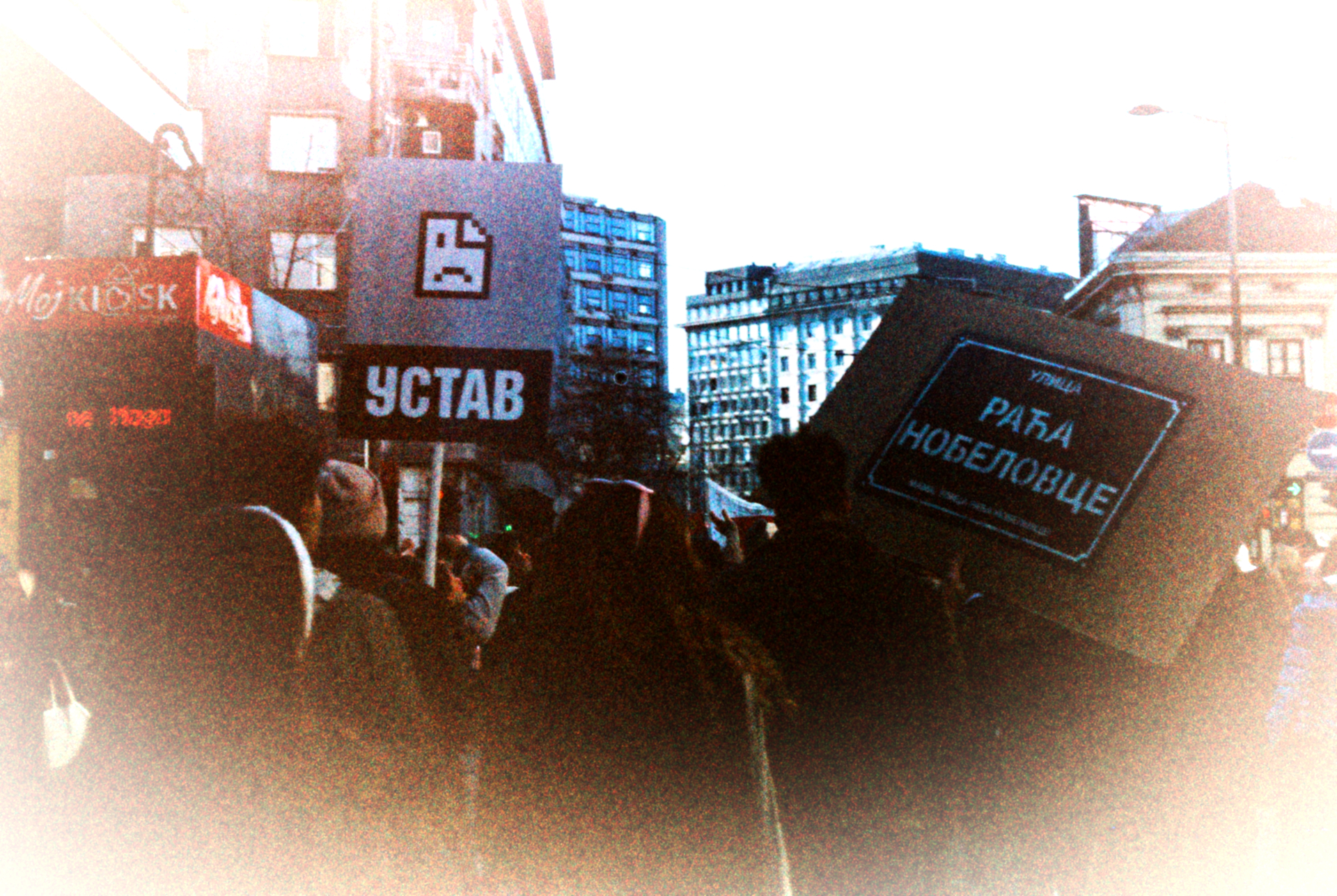
Snap parliamentary elections will be held in Serbia on 25 October 2026. Polling suggests that these will be the first genuinely uncertain elections in 14 years, with the authoritarian regime of outgoing President Aleksandar Vučić and his Serbian Progressive Party (SNS) facing a serious threat to its hold on power. The most serious challenge to Vučić’s rule comes from the student movement, which, together with citizens across Serbia, has spent the past two years organising mass anti-government protests and demanding the restoration of democracy, fundamental civil rights and independent institutions.
A survey conducted by CRTA and Stanford University’s Democracy Action Lab (DAL) found that among decided voters (70% of respondents), 44.9% would vote for the Student List, while 35.7% would support the SNS. The Faktor Plus polling agency, which cooperates with Blic, a media company operating both an online news platform and a television channel and considered close to the ruling SNS, has published a poll showing that the SNS has the support of 48.6% of decided voters, while the Student List has the support of 37.1%.
The first protests began after the collapse of the canopy at the reconstructed railway station in Novi Sad on 1 November 2024, a disaster that ultimately claimed 16 lives.
The station had been ceremonially opened in the presence of senior state officials and SNS representatives. The students demanded accountability and called on the competent institutions to fulfil their duties and determine whether corruption or abuse had occurred in the reconstruction project. Almost two years later, no one has been held accountable. During the many peaceful anti-government protests, some of which were larger than those held on 5 October 2000, when the regime of Slobodan Milošević was overthrown, the police frequently responded with repression and violence. The European Parliament’s October 2025 resolution on Serbia reported more than 1,028 arrests and at least 340 incidents of violence during the protests. It noted that these figures were incomplete and that some incidents had resulted in serious injuries.
One video that caused widespread public outrage showed a female police officer pulling the hair of a handcuffed student and attempting to force her to face her mobile phone in order to unlock it using facial recognition. The incident took place during the mass arrest of students who had blocked traffic in front of the Faculty of Law in Belgrade.
At Serbia’s largest protest, held in Belgrade on 15 March 2025, testimony from hundreds of citizens and assessments by domestic and international experts indicated that a sonic weapon had been used during the 15 minutes of silence held to commemorate those killed at Novi Sad railway station. Experts from the UK-based forensic audio investigation organisation Earshot concluded that it was highly probable that protesters in Belgrade were subjected to a targeted attack involving directed acoustic weaponry during the mass demonstration on 15 March 2025. The investigation, led by Earshot founder Lawrence Abu Hamdan, examined 19 video recordings, more than 3,000 witness statements and 15 in-depth interviews. Serbian military analyst Aleksandar Radić has also publicly stated that a sonic weapon was used during the protest.
Non-governmental organisations collected several thousand testimonies from citizens who sought medical assistance following the alleged use of the weapon. The SNS government and President Vučić deny that a sonic weapon was used. During the election campaign, the Higher Public Prosecutor’s Office in Belgrade announced that it had concluded that no sonic weapon had been used.
The authorities went so far as to arrest and prosecute people who publicly stated that a sonic cannon had been deployed.
Military analyst Aleksandar Radić was detained on 22 June, and his apartment was searched. He is suspected of preparing acts against the constitutional order and security of Serbia. The operation followed a statement issued by the Higher Public Prosecutor’s Office in Belgrade late last week, suggesting that the alleged use of a “sonic cannon” during the 15 March protest was part of a pre-planned simulation intended to provoke panic and destabilise the country. He has since left the country, and a warrant has been issued for his arrest.
Against this backdrop of pressure and repression, the student movement called for snap parliamentary elections more than a year ago. President Vučić ultimately called the elections on 9 September 2026, setting 25 October as the election date. At the same time, he resigned as president of Serbia on 27 September. Serbia is therefore expected to hold another round of elections at the end of this year or the beginning of next year. The date has not yet been officially announced. So far, no potential candidates for the presidential election have been announced. Having served two terms, Vučić can no longer stand for president; his campaign is therefore focused on returning to the post of prime minister of Serbia, which he held from 2014 to 2017.
The student movement, meanwhile, is contesting the election as the Student List – Students Win. Its 250 candidates were selected through a complex process involving background checks and faculties voting in plenums. During the student-led faculty blockades in Serbia in 2024–2025, plenums became the main mechanism of student organising. A plenum is an open assembly where students discuss demands, debate proposals and make collective decisions. Each faculty involved in the blockades had its own plenum, with coordinating bodies also operating at the university level.
After calling for early parliamentary elections in late 2025, students announced in May 2026 that they were preparing their own electoral list. They said that the students organising the protests would not run as candidates themselves. Instead, candidates would be selected through the plenums to represent the student movement in the elections.
The selection process involved interviews and discussions, followed by debates and votes at plenums. Students could also challenge candidates or veto their participation. The first ten candidates on the Student List were presented in Novi Sad on 10 September, marking the start of the campaign. On 14 September, after submitting the signatures required for the list’s candidacy, the students presented all 250 candidates. The list includes professors, scientists, doctors, artists, teachers, actors, pensioners and experts from various fields. It is headed by Ilija Srđanović, a professor at the University of Novi Sad’s Faculty of Medicine and a cardiologist at the Institute for Cardiovascular Diseases of Vojvodina.
Unlike conventional party lists, the Student List does not include politicians. Keeping party politicians off the list was a principle the students had consistently emphasised throughout the protests. In their public statements, students emphasised that candidates, if elected to parliament, would not receive a mandate to make decisions independently on behalf of the students, but rather to represent the principles and platform collectively established by the movement. They stressed that future members of parliament should be accountable to the citizens they represent, rather than to party leaders or individuals who nominated them.
Serbia has meanwhile developed an almost referendum-like political atmosphere, similar to that seen in Hungary ahead of elections in April 2026.
Almost the whole opposition, from pro-EU liberals to monarchists and communists, stands behind the Student List. Only the European Serbia and Authentic Right – Miloš Jovanović lists are contesting the election independently. The Socialist Party of Serbia, the government’s long-time partner led by Ivica Dačić, is running independently this time. Minority parties are also taking part, as are so-called “phantom parties”. The regime is suspected of being behind some of these lists, which were established shortly before the elections with names similar to those of existing opposition parties, in an effort to confuse voters and divert votes. Vučić’s party used the same tactic in previous elections.
Ana Stojiljković, an election campaign consultant who holds a PhD on the subject from the University of Leeds, says that these parliamentary elections differ from all previous ones. “In previous electoral cycles, the SNS entered the race as the dominant player, as an actor whose polling numbers indicated that it would win the election. That has been the case ever since the SNS came to power back in 2012 and took complete control of the electoral, media, political, party and all other systems in the country. This time, for the first time, the SNS is facing another actor of approximately equal strength, with roughly the same level of support”, Stojiljković says.
Stojiljković notes that this election campaign is unusual because the main challenger is not a traditional political actor, but a movement that lacks the conventional forms of political organisation and mobilisation. She argues that this makes the current electoral cycle particularly unusual in Serbia, as well as in a broader international context, given the emergence of a new actor in the political arena.
Across successive elections over the past 14 years, the regime has developed various mechanisms of manipulation, the most prominent of which concerns the electoral register.
It has still not been properly regulated or audited, despite EU recommendations. For example, in both these elections and the 2023 polls, cases emerged in which citizens were registered as residents at the address of an electrical substation. CRTA documented these incidents and published a report on them. In 2023, Nova.rs reported that a record number of voters were registered at 9 Kraljevića Marka Street in Belgrade, a building owned by former handball player Vladimir Mandić, who is close to the ruling SNS. A total of 154 voters were registered at the property for the Belgrade elections and 121 for the parliamentary elections.
Now, according to the records of the Ministry of Public Administration and Local Self-Government, as many as 147 eligible voters are registered as living in around 30 apartments. While attempting to verify the situation on the ground, N1 journalist Mladen Savatović was threatened and subjected to an attempted physical assault by the father of Vladimir Mandić. Similar cases have been reported across Serbia.
The Centre for Research, Transparency and Accountability (CRTA) is an independent, non-partisan civil society organisation that has monitored elections in Serbia since 2016. CRTA Programme Director Raša Nedeljkov points to cases documented in Bosnia and Herzegovina and Austria as examples of manipulation of the electoral register. He says that CRTA has collected very clear testimonies and evidence concerning the manipulation of registers of citizens of the Republic of Serbia living in Bosnia and Herzegovina for the purposes of voting in Serbia.
“What is interesting about the whole story is that employees of Serbia’s Ministry of Foreign Affairs, by accessing databases containing information on Serbian citizens with dual citizenship in Bosnia and Herzegovina, contacted these individuals and offered to register them in advance for elections that had not even been called at that point. This kind of canvassing was also recorded among the Serbian diaspora in Austria, particularly in Vienna,” Nedeljkov says.
Whether Austrian authorities will investigate the alleged use of Serbian state institutions to mobilise voters on Austrian territory remains an open question, particularly given Austrian rules on coercion, data protection and the political activities of representatives of third countries.
The broader conditions under which the parliamentary elections will take place are equally important. All five television channels with national broadcasting licences are under the control of the current regime, including the public broadcaster RTS, which is financed by all Serbian citizens. According to media monitoring conducted by CRTA in August, for example, government representatives accounted for as many as 98% of guests appearing on Dnevnik 2, the public broadcaster’s main evening news programme. CRTA also states that over the previous three months President Vučić received four times as much airtime on the public broadcaster as during the 2022 presidential election campaign.
“So there is this enormous disproportion and, fundamentally, an absence of pluralism in the media”, says Nedeljkov. He assesses that Serbia is entering this election campaign without strong institutions capable of providing a framework for free and fair elections. “Above all, I am referring to the prosecution service, which to this day has been unable to fully investigate a single election-related incident — from corruption and vote-buying, to physical attacks against activists and political actors from the opposition and student milieu by criminals linked to the authorities, and violations of the law by officials of the Ministry of the Interior and the Ministry of Public Administration and Local Self-Government in connection with manipulation of the electoral register”, says Nedeljkov.
Bojana Savović, a prosecutor at the Higher Public Prosecutor’s Office in Belgrade who was removed from the Anti-Corruption Department after conducting an investigation into corruption at Serbia’s state-owned electricity company, Elektroprivreda Srbije (EPS), involving people close to the authorities, says that dozens of recordings from previous elections show what she describes as the criminal offence of bribery in connection with voting. “The special anti-corruption departments have jurisdiction over these offences, yet no response from either the prosecution service or the courts. The state’s attitude towards this criminal offence can also be seen in the fact that special investigative measures — covert interception and recording — may be used in cases involving the giving and receiving of bribes in any field except in connection with voting, even though such offences are otherwise very difficult to prove.
“We also know that the City Electoral Commission and CRTA filed numerous criminal complaints with basic public prosecutor’s offices concerning the electoral register, the falsification of signatures during the candidate nomination process and the falsification of records of the work of polling boards. The complainants were never informed of the outcome of the proceedings, nor were they invited to provide statements, despite having direct knowledge of the criminal offences committed… The cases remain sitting in drawers, waiting for the statute of limitations for criminal prosecution to expire,” Savović says.
The Serbian Progressive Party was founded in 2008 by Tomislav Nikolić and Aleksandar Vučić after they left the Serbian Radical Party (SRS), which they had led alongside Vojislav Šešelj, who was convicted of war crimes in 2018 by the Mechanism that took over from the ICTY. Šešelj is also an SNS coalition partner in the forthcoming elections. His son and members of the SRS are on the SNS electoral list.
The SRS was a coalition partner of Slobodan Milošević, Serbia’s president during the wars of the 1990s, while Vučić served as Minister of Information (1998–2000) during a period in which independent media outlets were being shut down.
In 1998, the government adopted the Law on Public Information, whose primary aim was to exert financial and legal pressure on independent media outlets that criticised Slobodan Milošević’s regime. The law imposed exceptionally high fines that could seriously threaten the financial survival of media outlets, particularly smaller and independent newsrooms. According to the Association of Journalists of Serbia, the deadline for payment was 24 hours, with the possibility of compulsory enforcement and asset seizure.
Nikolić and Vučić returned to power in Serbia in 2012, temporarily changing their rhetoric.
At the time, they presented accession to the European Union and the fight against corruption as Serbia’s primary political objectives. Yet Serbia has not opened a single new cluster or chapter in its EU accession negotiations since 2021. Investigative journalism outlets have reported that Vučić and his associates have been linked, directly or indirectly, to a series of corruption scandals. On 15 October 2026, Radar published previously undisclosed Sky ECC messages which, according to the outlet, suggest links between Serbia’s top political leadership and Darko Šarić’s drug cartel. In communications between Šarić’s associates, President Aleksandar Vučić is allegedly referred to by the nicknames “Oskar” and “Čvarak” (“Pork Crackling”), according to Radar’s interpretation.
Of particular significance is an exchange of messages from June 2020, which refers to an alleged promise made by the person identified as “Čvarak” that Šarić would not receive a prison sentence exceeding ten years, that he would be acquitted of money laundering charges, and that part of his assets would be returned to him. In the event of an unfavourable court ruling, a presidential pardon was also allegedly promised.
As early as 2015, KRIK revealed that outgoing Finance Minister Siniša Mali, who was then the mayor of Belgrade, had been linked to the purchase of 24 luxury apartments on the Bulgarian coast, worth approximately €5 million. In 2021, new documents published as part of the international Pandora Papers investigation confirmed, according to KRIK, that Mali had owned two offshore companies through which 23 apartments were purchased, while he bought one apartment in his own name. KRIK also reported that he had failed to declare these assets to the Agency for the Prevention of Corruption. Mali had previously denied owning the offshore companies.
Radar published details of an indictment filed by the Higher Public Prosecutor’s Office in Belgrade concerning the reconstruction of the railway station in Novi Sad, where the collapse of a concrete canopy killed 16 people. Former ministers responsible for the sector, Tomislav Momirović and Goran Vesić, are suspected of causing more than $115 million in losses to the state budget through amendments to contracts with the Chinese contractor. These contract amendments could not have been approved without a positive opinion from the Ministry of Finance.
Correspondence reviewed by the author’s newsroom shows that the ministry was fully informed of the amounts involved, the deadlines and the agreements reached with the contractor.
Nevertheless, Finance Minister and First Deputy Prime Minister Siniša Mali, who is currently serving in a caretaker capacity, has not been included in the investigation. According to Radar’s investigation, the documentation includes correspondence between participants in the state project and representatives of President Aleksandar Vučić’s office, including Nataša Vukšić, one of his close associates.
Despite these reports, court proceedings have been rare. Serbia’s Prosecutor’s Office for Organised Crime and High-Level Corruption, which initiated some proceedings, has meanwhile come under attack from Vučić, other government representatives and media outlets under their control. Following the launch of the proceedings, the authorities dismantled working groups that the Prosecutor’s Office had established with the police, tax authorities and other institutions.
The authorities, meanwhile, have launched an unprecedented negative campaign against the students and their candidates under the slogan “United Serbia”.
Even before the campaign, there had been cases in which photographs and video footage of government critics were published in pro-government media outlets and used to portray them negatively. One such case involved a photograph of the first candidate on the Student List, Dr Ilija Srđanović, stepping off a train in Belgrade. The accompanying text claimed that he had used the high-speed railway built by Vučić and that he had travelled from Novi Sad to Belgrade to receive instructions from Western powers — a familiar trope in Vučić’s propaganda outlets.
Public resources are also being misused during the campaign, with funds distributed to citizens on various grounds, particularly pensioners, whose votes Vučić is counting on. According to CRTA, the amount involved is approximately €1 billion. Against projected state-budget revenues of €25 billion, the scale of this expenditure is substantial. The question is whether these measures can bring additional votes to the SNS and Aleksandar Vučić, and whether support for the Student List can grow over the course of the campaign. Election campaign consultant Ana Stojiljković says that the electoral atmosphere in Serbia is so tense that opinion polls can capture only the current situation, not predict how developments will unfold.
“Research conducted over the past six months has shown that the electorate is already largely divided. The SNS and the Student List are expected to account for around 80% of voters between them. This means that only a small proportion of voters remain potentially undecided, along with a certain number of abstainers”, says Stojiljković. She notes that, in essence, this is a struggle between efforts to control the electoral process and the mobilisation of large numbers of people. “And now we will see what happens,” Stojiljković concludes.
Elections in Serbia will be monitored by domestic (CRTA, BIRIDI, Transparentnost Srbija and CeSID) and international institutions and organisations. On 16 September, ODIHR established an international election observation mission, with delegations from the OSCE, the European Parliament and the Parliamentary Assembly of the Council of Europe also expected to participate on election day.
ODIHR published its first interim report, covering the period from 16 September to 7 October. The report states that the accuracy of the Unified Voter Register is questionable due to an unusually high number of registered voters in certain municipalities and at specific addresses. It describes the election campaign as highly polarised, with reports of intimidation of activists, tensions and isolated incidents of violence. ODIHR warns that recommendations concerning pressure on voters, misuse of public resources, oversight of campaign financing, the independence of the media regulator and the safety of journalists remain unimplemented. ODIHR will deploy an additional 300 observers on election day, and its report will serve as a basis for the European Union’s position and response to the election results.
One particularly concerning aspect of the report is ODIHR’s doubts about the neutrality of the Republic Electoral Commission (RIK), which is responsible for announcing the official results of the parliamentary elections.
Many Serbian citizens are therefore wondering whether RIK will announce the actual results, and what will happen if it does not.
Serbian citizens have experienced a similar situation before. Following the 2000 presidential election, Vojislav Koštunica, the candidate of the Democratic Opposition of Serbia (DOS), won a majority of the votes. However, the Federal Electoral Commission claimed that he had not secured more than 50% of the vote, thereby attempting to force a second round of voting. Mass demonstrations and blockades followed, culminating on 5 October. The following day, Slobodan Milošević conceded defeat. It is difficult to predict what the day after the elections will look like in Serbia. Much will depend on whether the authorities are prepared to acknowledge defeat if the election results go against them.