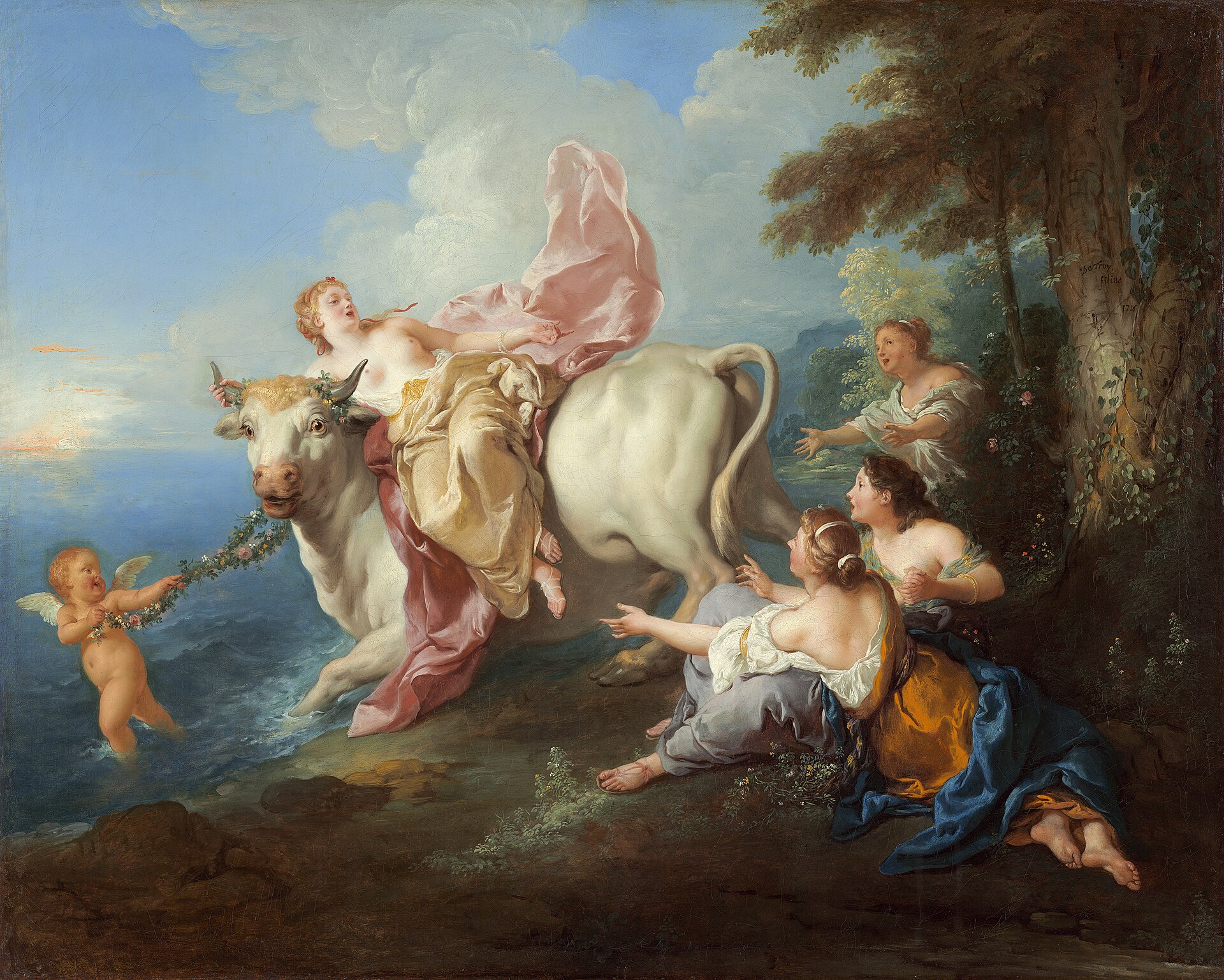
Cover: Jean François de Troy (French, 1679 - 1752 ), The Abduction of Europa, 1716, oil on canvas, Chester Dale Fund. National Gallery of Art, Washington
In this love letter to Europe, Tomáš Sedláček, who grew up flying over the Iron Curtain, asks whether Europe can still love back.
Dear Europa,
I feel shy writing this. A grown man speaking of love, writing love letters! But, as they say, a letter does not blush.
Ever since I first began to feel love, in my early teens, I have wondered: when we love, what part of us loves what part of the other? It is not really beauty, accomplishments, eloquence, wealth or cleverness. Those are all nice, but they are outward qualities. Would you fall out of love if one of them disappeared? In the end, I think we love the part that is capable of loving us back. Are you capable of loving back? I am writing this letter not to your institutions, but to you, to your spirit.
I think I first vaguely sensed you in the difference between totalitarian Czechoslovakia and Finland.
My father worked for Czechoslovak Airlines, so I grew up in both Prague and Helsinki, flying over the Iron Curtain perhaps more than any other child. I did not sense you in material things, nor even in politics—a small child has no way of understanding those. But I felt the difference in spirit. In Finland, I felt happiness, optimism, freedom, smiles, kindness, openness, honesty and laughter. It felt light in both senses of the word: full of light and free of weight. Finland felt bright and light. Czechoslovakia felt dark and heavy.
So it was personal when I met you for the second time. I was twelve during the Velvet Revolution. There were people, so many people, chanting your name! “Back to Europe!” became one of the crowds’ great rallying cries. They wanted you. They wanted to return to you, and they wanted you to return to them. But how ironic, I thought: Czechoslovakia is in Europe. It always has been. What, then, were these people chanting for? Surely not a geographical shift.
I suppose they were calling for your spirit to return, or asking to return to it. A journey had begun.
Journeys rarely resemble their destinations, and so it was with you. It was a journey through bureaucracy, politics, compromises, unfamiliar new enemies and economic policies. At times it was boring; at others, teeth-grinding and nerve-racking. But when Odysseus, Frodo, Neo and Luke Skywalker—like almost all heroes—followed their hearts, the call of the spirit, they encountered its opposite. Cyclopes, dragons, machines that had enslaved humankind, an entire totalitarian Empire striking back. What we met instead was paperwork. You, Europe, became a technical task, a matter of the acquis communautaire—a job for lawyers. You became the Maastricht criteria—a job for economists and policy advisers. You became a set of advantages and disadvantages in the minds of marketing experts and public intellectuals. For students, you became Erasmus. For ordinary people, food and safety regulations. For the media, a target. For politicians, an excuse. I am not writing this love letter to that.
I met you again when I began working for Václav Havel, having just turned twenty-four. To me, he became the face of a true European, the face of Europe’s spirit. An adventurous hero who looked nothing like a hero. A fragile body, a trembling voice: softly spoken, shy, meek. But when confronted with the full force of the Soviet machine of war and ideology, his spirit shone strong and clear. He held his ground. That is your face to me. A man who went through hell and stood firm. A man who knew the power of the spirit, the power of listening to the inner voice that he, like Socrates, followed.
Then I began thinking about you more when José Manuel Barroso asked for a group to be formed to try to identify what you actually are. Stripped of bureaucracy, economics and negotiating tables, what remains? Europe, what is your identity, your character, your heart, your spirit? What are you? What part of you can be loved, and can love back? It was a more difficult task than one might imagine. And back then, I think we failed.
But now you stand naked. Attacked from the east by Russian tanks, and from the west, ideologically, by the US administration. Attacked from within by the rising voices of those who doubt you. You seem to stand alone.
And you have already been through so many severe crises: the financial meltdown, the refugee crisis, Brexit, Covid, the energy crisis and many others. You have endured. But now you stand exposed, stripped of protection, deprived of cheap energy supplies from Russia. Now that you are naked, your spirit, your core, is easier to see. What can carry us forward is that core: your spirit, the hope and belief that animate you. And it is needed now more than ever. Not just for us, but for the world.
The word of the decade is resilience. But the resilience of what? What could make people fight for you if, God forbid, it came to that? A strong and conscious spirit, lucid and luminous. Institutions cannot be loved; your spirit can. We loved you most when we were outside you. Your greatest lovers are now in Ukraine. Is that a general feature of love? Has our love grown cold? How do we awaken it again?
What a life of good and evil you have lived!
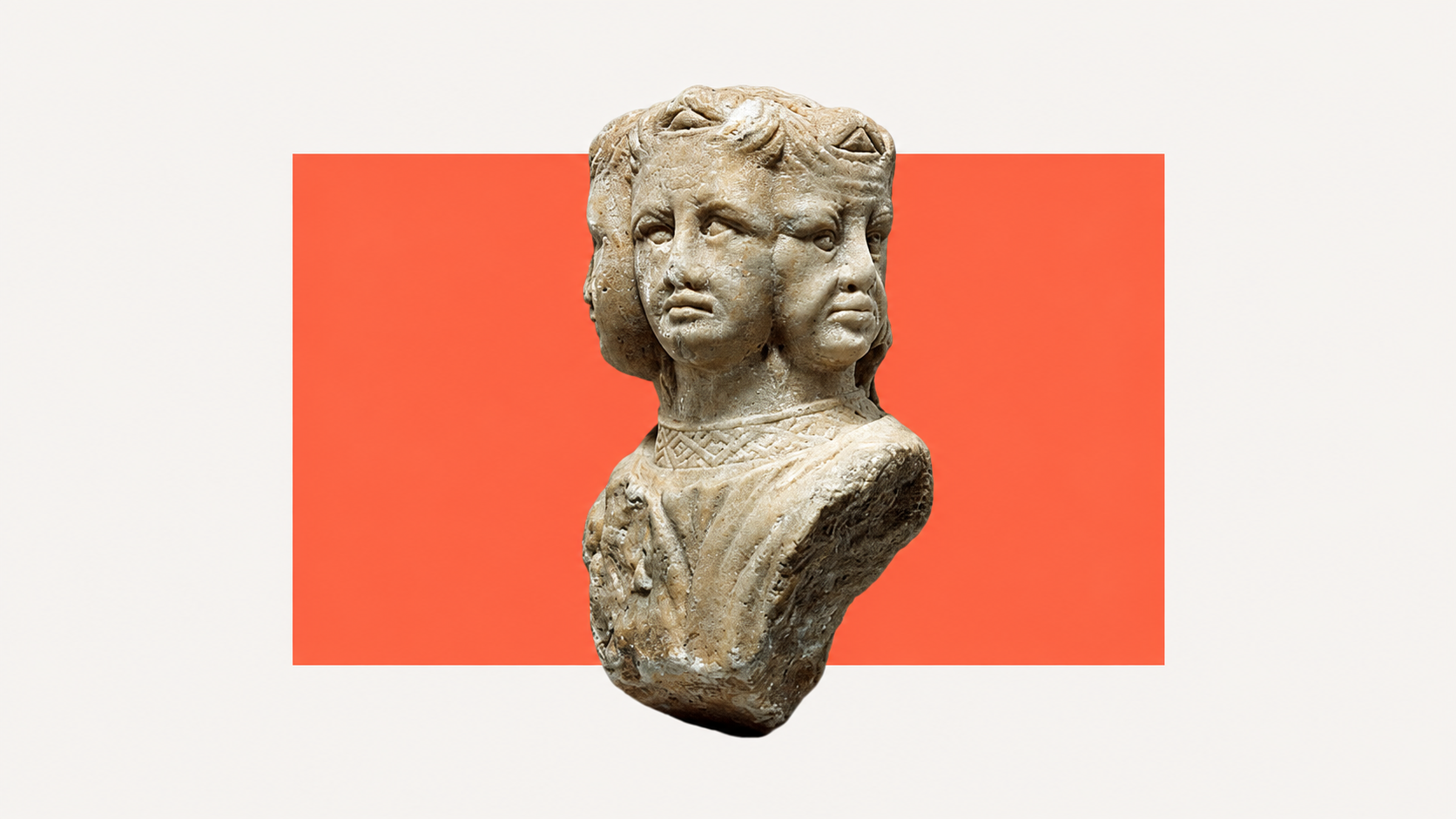
Your name was born in Greek myth. You were a young and beautiful maiden. Zeus fell for you and carried you away. Ever since, your brothers have been searching for you. I join them in this quest—as your brother, your son and someone who loves you. A love letter without love is nothing.
But it was not only the Greeks who forged you. It seems to me that you are the meeting of three cities: Athens, Jerusalem and Rome. Athens gave you your mind: the love of truth and wisdom, philo-sophy. Jerusalem gave you your heart: an almost unthinkably radical love and compassion for the weak—the ultimate meekness and belief in the power of the powerless. Rome gave you your body: power and order. What a mix! How many schisms this must have created between your spirit, mind and body.
For centuries, you also called yourself Christendom. Out of this mixture came science, democracy and capitalism. With this muscle, mind and spirit, you produced a great European economic miracle: it began here, but fed the whole world. Yet Nazism and communism were also born within you, systems built on hatred and lies. Both tried to run you on muscle and mind alone, without a heart. Both of these totalitarian systems have fallen.
What I love about you is this: having been the villain of the world, you repented and became lovable.
You underwent an extraordinary metanoia, turning your spirit towards truth and love, quietly and without fanfare. What I love about you is that you welcome criticism. What I love about you is that you have given the maxim “love your enemies” its fullest institutional expression. Look at France and Germany: three wars in seventy years, and now one parliament and one currency. What I love about you is that you have become an empire without an emperor. You have become hesitant about enlargement, cautious about expanding, even towards those who most want to join you—so unlike other empires, past and present. What I love about you is that you have become wise: slow, rigorous, giving your care and love institutional form.
I love the shape that freedom has taken in you. You do not force love; you inspire it in those beyond your borders.
What I love about you is that, through this power of the powerless, you could become a blueprint for the future organisation of the world. This spirit of Europe should be offered to the world as an alternative to the power of the powerful. And finally, this way of loving works. So many countries love your spirit and want to marry you, to join you. Notice: the USA has no such suitors, even though it is using its power to expand. Nor do Russia and China, for all their power. But look at Canada! From across an ocean, she has drawn closer to you than ever—not for your economy or your military strength, but for your spirit.
So you see, you are attractive! And to the question I began with, whether you can love back: I think you can. You did it for a twelve-year-old in Prague who wanted to come home to you. You are doing it now for Ukraine. The power of the powerless is the power of the spirit of truth and love. May this spirit be with us always.
With love,
Tomáš Sedláček