The EU needs stronger protection against democratic backsliding. Its newest members should not be the only ones subject to it.
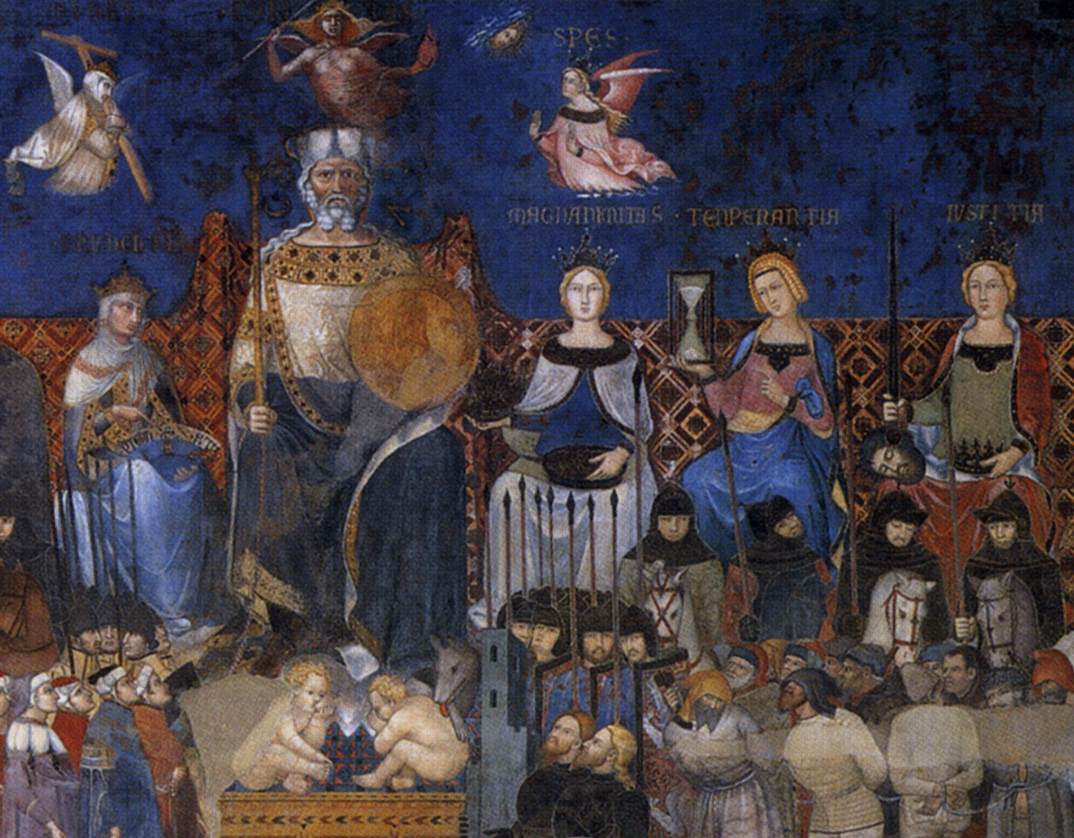
In 1338, Ambrogio Lorenzetti began painting a warning for the men who governed Siena. On the walls of their council chamber, good government brought trade, building and dancing in the streets. Bad government brought tyranny, bound Justice and a city falling apart. The rulers sat between the two. The warning applied to them.
In 2017, Antonio Missiroli, then director of the EU Institute for Security Studies, chose a detail of the frescoes for the cover of Resilience in the Western Balkans. His foreword recalled the EU Global Strategy’s call to tackle fragility “at its core as well as on the periphery”. After the Union’s struggles with democratic backsliding, those words deserve another reading.
The European Commission’s new enlargement plan risks forgetting half the lesson.
Published on 6 October 2026, Preparing for a wider Union proposes a special institutional safeguard for the first 15 years of a new member’s EU life. Serious breaches of EU values or the duty of sincere cooperation could, in particularly serious cases, lead to the suspension of its Council voting rights. Measures would take effect unless a qualified majority in the Council rejected them.
For today’s members, the route to suspending those rights would remain Article 7. It requires a unanimous finding by the other members of the European Council that a serious and persistent breach exists, followed by a qualified-majority Council decision on sanctions. The European Parliament must also give its consent to the finding. A single ally can block that decisive step.
The difference is deliberate: future members would face an easier route to losing their vote. The Union would enforce common obligations according to when a country joined. We call this membership by vintage. It treats a problem that can arise anywhere in the Union as though it belonged at the frontier.
In When the Map No Longer Holds, Alexander Schallenberg and Francesco Rocchetti describe Europe’s habit of forcing new realities into old categories. Enlargement has its own version of that mistake: we still treat accession as the line between democratic risk outside and reliable government within. A longer probation for newcomers leaves that old map intact.
There is a serious case for stronger safeguards, and no one should pretend otherwise. Candidate countries have their own record of political pressure on courts and prosecutors. The Commission’s 2026 Rule of Law Report shows that record is not history. Accession must not become a reward for passing reforms on paper and dismantling them once inside.
But membership has never been a vaccine against bad government. Article 7 proceedings began against Poland in 2017 and Hungary in 2018. Neither led to the suspension of voting rights. Poland’s procedure was closed in May 2024 after the Commission assessed the new government’s commitments and reform plan. That history shows both the limits of EU enforcement and the importance of domestic politics.
Money has given the Union another means of pressure. In December 2022, the Council suspended about €6.3bn in commitments for Hungary under the budget conditionality mechanism. Heather Grabbe of Bruegel calls the freezing of funds the “only effective sanction” against a member that turns on the Union’s values. The instrument protects the EU budget where rule-of-law breaches put it at risk; it is no general cure for democratic decay. In Hungary, the decisive reversal came from voters, who broke the governing party’s grip on a captured system. Undoing that capture remains the work of government. Neither lesson has anything to do with when a country joined.
The reply from cautious capitals is familiar: safeguards are the price of ratification. Better a period of probation than another decade outside. Governments need to reassure voters that enlargement will not import another crisis. That argument deserves an answer rather than a lecture. The answer starts with what these safeguards would actually do.
The 2004 enlargement did have three-year safeguards. But three years was the window for invoking them, not an absolute expiry date for every measure. Internal-market and judicial-cooperation measures could continue while the failures that justified them persisted. These clauses addressed economic disruption, accession commitments and specified problems in judicial cooperation. They did not provide a special route to suspending Council voting rights.
So this is more than a clock stretched from three years to 15. It is a different kind of power, reaching into a state’s political standing in the Union. Fifteen years covers nearly four ordinary four-year electoral terms. A child starting primary school at accession could be at university before the special regime ended. As Corina Stratulat of the European Policy Centre points out, 15 years reaches far beyond an initial adjustment period.
Nor does “temporary” always mean brief. Bulgaria and Romania entered in 2007 under the Cooperation and Verification Mechanism, established through decisions citing their accession safeguards. The mechanism had no fixed three-year sunset. It was formally repealed only in September 2023. The lesson is to read the exit conditions as carefully as the entry conditions.
There is also a constitutional argument.
The Treaties require respect for the equality of member states. Legal scholar Luke Dimitrios Spieker argues that the clause strikes at that principle, and that such a change belongs in Treaty revision rather than an accession treaty. The clause’s legality is contested, and accession treaties have long contained unequal transitional arrangements. But the political question survives any legal defence: why should two governments face different obstacles to losing their vote for comparable misconduct?
A leader dismantling checks on power would welcome the grievance. A special regime offers an easy story about humiliation and second-class membership. Volodymyr Zelenskyy rejected associate membership by insisting that Ukraine was defending Europe fully, “not with half-measures”. His objection was to membership without a voice, rather than to this safeguard. But candidate governments could draw on the same grievance when faced with 15 years of probation. That makes reciprocity essential to the design’s credibility.
The same problem appears in the proposed restraint on bilateral vetoes. Future members would undertake, for a limited period, not to oppose enlargement decisions over bilateral disputes. North Macedonia knows the cost of such disputes. Its path was held up for years by the name dispute with Greece, then by Bulgaria’s objections over history and language. Asking newcomers to show restraint is reasonable. Leaving incumbents free of the same commitment is much harder to defend.
Nor can a safeguard clause do the work of political leadership. On 24 September 2026, Germany’s Bundestag debated an AfD motion opposing Ukraine’s EU membership. A longer probation period is unlikely to persuade opponents whose objection is to membership itself.
Public opinion, meanwhile, is more open than the language of permanent emergency suggests.
In spring 2026, Eurobarometer recorded 53% support for further enlargement and 40% opposition across the EU. Before the 2004 enlargement, support stood at 42% in the then EU15. The populations and questions differ, so the figures do not form a clean trend line. They do remind us that governments have enlarged the Union without waiting for overwhelming public enthusiasm. What would painting the other wall mean now?
First, connect any special safeguard to a credible commitment to improve enforcement for everyone. Shorten the 15 years to the three-year window that applied to Croatia, and to Bulgaria and Romania before it, with an earlier end if an equivalent Union-wide mechanism takes effect. A promise of future reciprocity must not leave newcomers on probation indefinitely. Set a political deadline for incumbents to agree common reform, too.
That requires legal honesty. An accession treaty can set admission conditions and the Treaty adjustments that admission entails. It is not an established shortcut to rewriting Article 7 for all members. The Commission’s own plan proposes timetables for Article 7 procedures and clearer follow-up within the existing Treaties. That can start now. If changing the voting thresholds requires Treaty revision, governments should make that case openly. Montenegro’s accession should prompt the commitment, rather than carry the burden of an untested legal workaround.
Second, make restraint on bilateral vetoes mutual. Existing members should offer the same undertaking they seek from newcomers. Majority voting at intermediate stages would help. In our March 2026 paper, A Europe that Acts, we examined four models for doing this. The Commission now recommends majority voting for opening negotiating clusters and other intermediate decisions.
Final admission would still require unanimity and ratification by every contracting state. Capitals would retain their say on membership without being able to turn every procedural step into a bargaining counter. Heather Grabbe puts the number of veto points during negotiations at around 150. That is a tax on credibility, paid largely by pro-European governments in candidate countries.
Third, make gradual integration worth having. Access to parts of the single market and EU programmes should follow demonstrable compliance, bring benefits people can feel, and remain reversible when commitments are broken. That was the case made in Access Before Accession in 2025. It should lead towards full membership, with effective enforcement thereafter for everyone.
These choices need a government willing to argue for them at home. Germany has a particular responsibility. It launched the Berlin Process in 2014. In Tivat in June 2026, Friedrich Merz said he wanted the region’s countries to become EU members soon. Helping Montenegro complete the journey on fair terms would give that promise substance. It would also give German voters a concrete result to judge.
Lorenzetti’s councillors were not being asked to inspect their neighbours. They were being reminded of what their own power could do. As the Union prepares Montenegro’s accession arrangements, it should keep that warning in view. Good government cannot be a condition for latecomers alone.