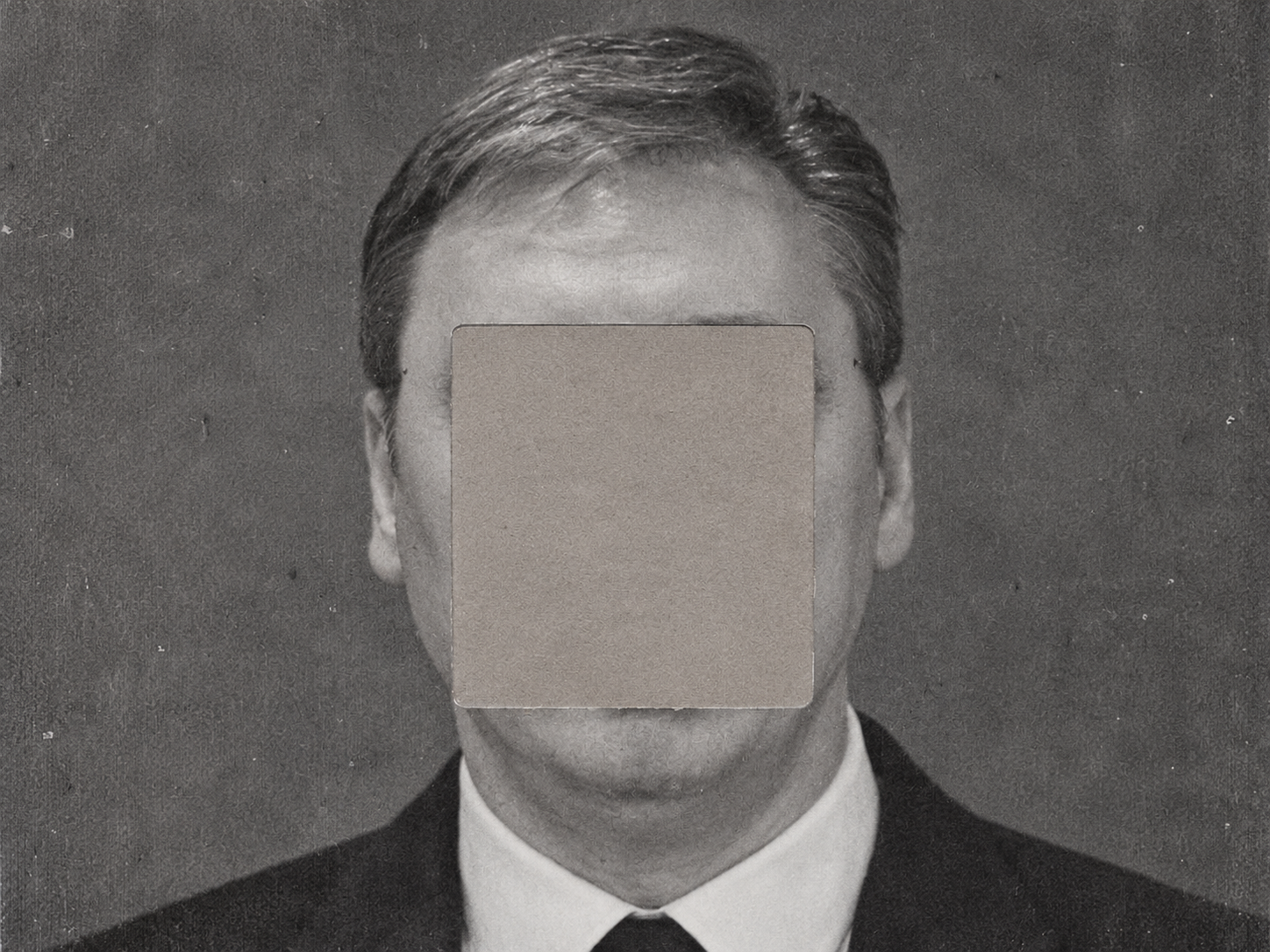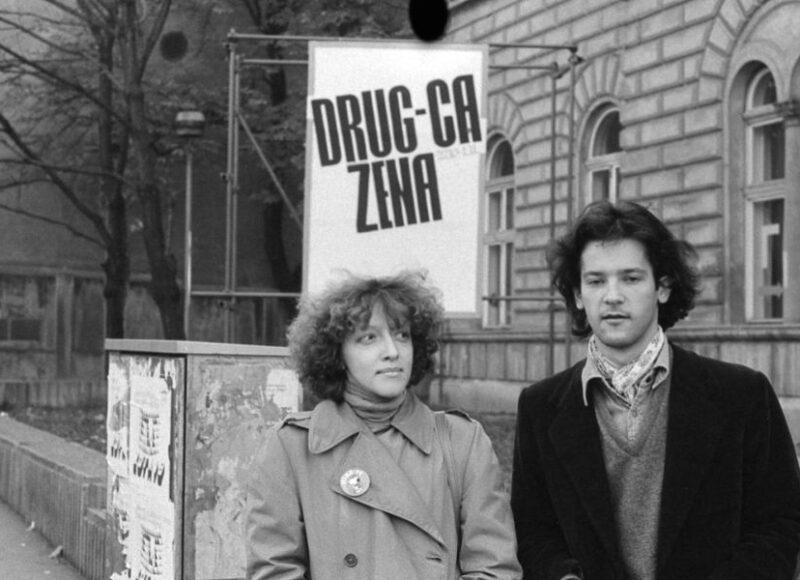
Cover: Croatian writer and journalist Slavenka Drakulić (1949-2026) and Ivan Vejvoda, Belgrade 1978
From the disappearance of Yugoslavia to the war in Ukraine, a plea for Europe to remember its darkness and defend what it has built.
Dear Europe,
I was born in a country of yours that no longer exists. Yugoslavia imploded at the end of the last century and slid off the map – which, in Europe, in the 1990s, was not supposed to happen. I belong to your post-war generation, the one raised on the lesson of the camps. We were taken to see them, we met the survivors, we read the books and watched the films, and we were handed a phrase to carry through life: Never again. Never again the Holocaust. Never again the killing of people for being different or thinking differently. Never again strongman politics. My father fought fascism twice: first in Spain in 1936, and then in Yugoslavia during the war that followed. What he left me was the conviction that the fight for freedom is never truly won. He taught me to keep alive the flame of resistance to fascism, wherever it might reappear, and to understand culture, all culture, as the foundation of humanity, creativity, and imagination. That, Europe, is your inheritance.
In 1948, the Universal Declaration of Human Rights was signed, and we believed it. We had reason to. Out of the rubble of two wars that had killed tens of millions, your citizens asked themselves a terribly important question – how do we stop slaughtering one another every 20 years? – and then did something about it.
Three centuries earlier, watching Catholics and Protestants butcher each other, John Locke had pleaded for them simply to tolerate one another’s beliefs. Your European Economic Community, and later the European Union, was that plea turned into an institution. I know you prefer to remember your ideals of freedom and justice, the battles for human dignity and respect, the Renaissance and the Enlightenment and the modern democratic revolutions, ancient Greece and art and literature and philosophy, and all of that has inspired and continues to inspire the imagination and creativity of us all in so many ways.
But to protect your future, you need to remember your dark past as well. And I’m not just talking about those things we swore we’d never do again: the Holocaust, Nazism and fascism. Because you have shown another darkness since then, and I experienced it early in my life. The European countries that signed the Treaties of Rome with the noblest intentions, in 1957, still ran colonies; France was waging war in Algeria until 1962. You have liked calling yourself a haven of peace since 1945, but that is only half true. The Soviets invaded Hungary in 1956 and Czechoslovakia in 1968; Turkey took the north of Cyprus in 1974.
I came of age in Paris in 1968: I was 18 years old and I was in the streets with the students the same year that Soviet tanks rolled into Prague. My father who was then ambassador of Yugoslavia to France simply said: “I would love to now be in the street with the students.” That year in Paris the student protests as well as in many parts of the world and in my own home town in Belgrade had brought forth along with question of greater social rights, academic freedom, a whole set of other issues: feminism, ecology, anti-psychiatry, gender.
“Be realistic, demand the impossible” was one of the many slogans of a generation breaking barriers and seeking greater rights. And then I watched my own country disappear. I did not see it coming.
As a social scientist, I believed that Europe had learned certain lessons, and that some catastrophes would not be repeated. Yugoslavia was a communist country, a federation. It was not a free country in terms of rights and political freedoms, but it was freer than the countries living under the Soviet yoke. We were outside the Soviet bloc, beyond the Iron Curtain. We could travel freely. Our university curricula resembled those in the West. And yet the backbone of the country was communist, and the struggle for power among communist and nationalist elites led to a violent breakup that those of us who opposed it were too weak to stop. One country became seven.
Europe, your borders have moved so often that a person could be born, grow old, and die in one town and have at the same time lived in four or five different countries. Those are hard experiences to live through.
I knew, the way one knows a thing in the abstract, that the old European evil could return. I did not believe it would happen to me, in my lifetime, in the first years after communism fell. So Europe, I am writing to you because I have lived both of these versions of you in one life, and I need you to remember them both with equal intensity and awareness. Especially because, today, there is again a war on your soil – Russia’s invasion of Ukraine. The Ukrainians are doing what my generation was taught to admire: showing the courage and temerity to stand up, at an enormous cost, to an invader that means to erase them. And you – slowly, imperfectly, but the best way you can – are standing with them.
You opened membership talks with Ukraine and Moldova, and kept the door ajar for the Western Balkans. You are doing so against the wishes of two governments that would prefer you weak: the one in Moscow and the one in Washington. You’re also fighting strong headwinds, between populism, identity politics, right-wing extremism, and autocracy. And you’re doing it well: this spring, after 16 years, Hungarians voted out the regime that had hollowed out their state. In Serbia, my country, people have been in the streets for months, demanding the return of the rule of law. I cannot think of anything more European than that.
The memory of that evil should never fade. It should make you, Europe, act more decisively to safeguard what you have achieved, and to strengthen your unity and purpose.
The times we live in are more volatile than they have been in decades. Around you, global powers are dismantling much of what kept the world relatively stable. You are the bearer of universal values and rights. To uphold them, you must strengthen your political, economic, social, and security institutions. You are doing this too slowly. Yes, I understand: as the European Union, it is difficult for 27 member states to find a unified voice. All politics is still local. But that is precisely what has led us, in the past, down very dark alleyways. New common institutions, especially in defence, must be built with far greater conviction.
Your people, your citizens, need to be spoken to more directly and more often. They must be brought into the project, not treated as spectators of it. They need to understand both the threats Europe faces and the possibilities contained in a stronger common purpose. Memory matters because it is one of the defences you have against extreme chauvinism, racist demagoguery, xenophobia, and the historical revisionism that keeps trying to whitewash, distort, and obliterate the past.
This article is one issue of our monthly newsletter Love Letter to Europe. Subscribe here.