There’s a moment when the old maps stop working, and someone has to decide whether to correct them or draw new ones. Europe has reached that moment. This is why we exist.
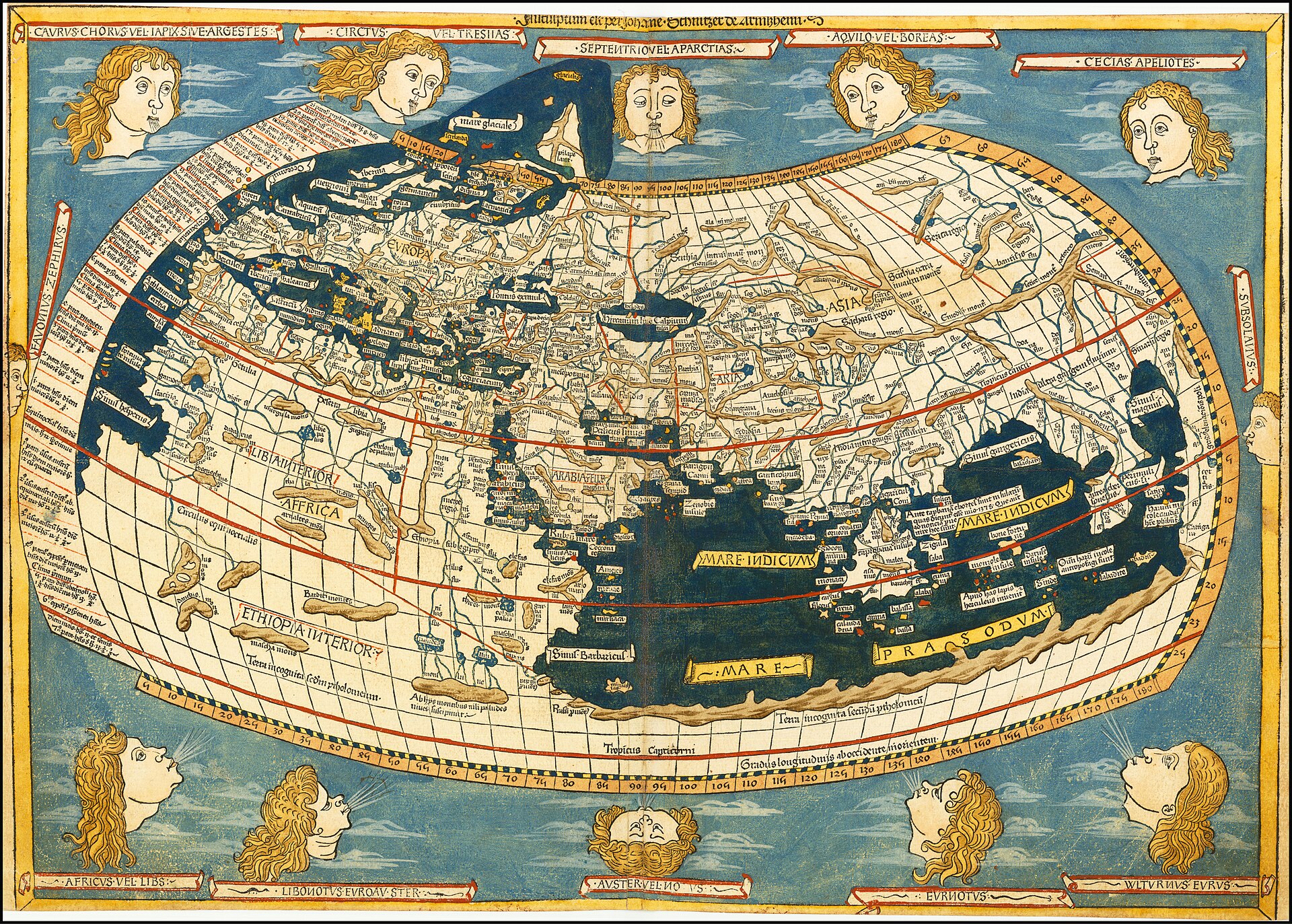
In 1507, in Saint-Dié, a small town in the hills of Lorraine, a handful of humanists and cartographers set out to bring the map of the world up to date. They began with Ptolemy, whose geography had shaped European maps since antiquity. The trouble was that the reports piling up on their table no longer agreed with him. Ships were coming back from the Atlantic with coastlines that fit nowhere, with distances that refused to add up, with land where the old maps had drawn open sea.
For years European mapmakers had tried to make the new fit the old. Columbus had sailed west believing he would reach Asia, his confidence built on a map that made the ocean narrow and the Indies near. When he found land, the easiest thing was to call it Asia, or an island off its coast, or a stop on the road to the Indies.
The mapmakers patched and stretched and crowded notes into the margins, bending every discovery back into the three familiar parts of the world, Europe and Asia and Africa, because those were the only parts the inherited grammar allowed. The maps grew busier, and less true.
Then Martin Waldseemüller did the opposite. He looked at the same reports and decided the old categories had run out. Rather than force reality into the map, he changed the map, and wrote a new word on it: America, after Amerigo Vespucci, who had understood that this was a new continent and not the far edge of an old one. More than a new name had appeared. An old order of the mind had collapsed.
Europe is living through such a moment now. The certainties through which much of the continent learned to recognise itself – peace as the horizon within which politics would unfold, prosperity as a promise that renews itself, the Atlantic alliance as a guarantee that needed no negotiation – have stopped describing the territory. For decades we treated them as the stable backdrop against which everything else played out. The backdrop has begun to move, and it moves faster than we do. The territory has changed, and Europe’s intellectual tools need updating in this accelerated present.
Europe’s Futures Initiative was born to imagine the Europe still to come, more than to explain the one already behind us, and to make that future imaginable before it becomes inevitable. It is three things at once: a way of thinking, a public conversation, and a journey across the continent.
Our strength is a pan-European community of people across more than twenty countries. EFI is powered by the collective intelligence of thinkers across Europe, who regularly come together to test ideas and challenge assumptions by thinking beyond their own national vantage points. Their authority matters but something more interesting happens when their perspectives are brought into the same conversation: Europe begins to look different to each of them. Also Waldseemüller, the cartographer, worked from reports that were already on the table. What he changed was the way of reading them.
So we refuse the comfort of a single European viewpoint. Vienna does not see the same continent as a Mediterranean port, an eastern frontier, an Atlantic edge, a Balkan capital still waiting at Europe’s door, or a northern country relearning the language of defence. Each of these places carries a part of the picture. Each also misses something on its own. Taken together, they reveal a continent moving at different speeds, with different fears and expectations, inside the same historical moment. The Europe taking shape can no longer be read from Western Europe alone. It has to be approached from several places at once, because only then does the picture become less comfortable and more true.
We were born in 2026, after the first quarter of this century had closed. We do not come from the optimism that followed 1989, or from the confidence of the early years of globalisation, or from the belief that Europe could remain a protected space while history happened elsewhere.
We come from the Europe of war, technological rupture, climate pressure, democratic anxiety and geopolitical competition. That gives us a different responsibility: to look at the Europe ahead with the eyes of those who know that the old settlement will not return. Ideas that truly matter often arrive as stories, and Europe has suffered for too long from an excess of explanation and a shortage of them. We want to give people back the sense that the European future is still something to be written and lived, and not only something to be endured.
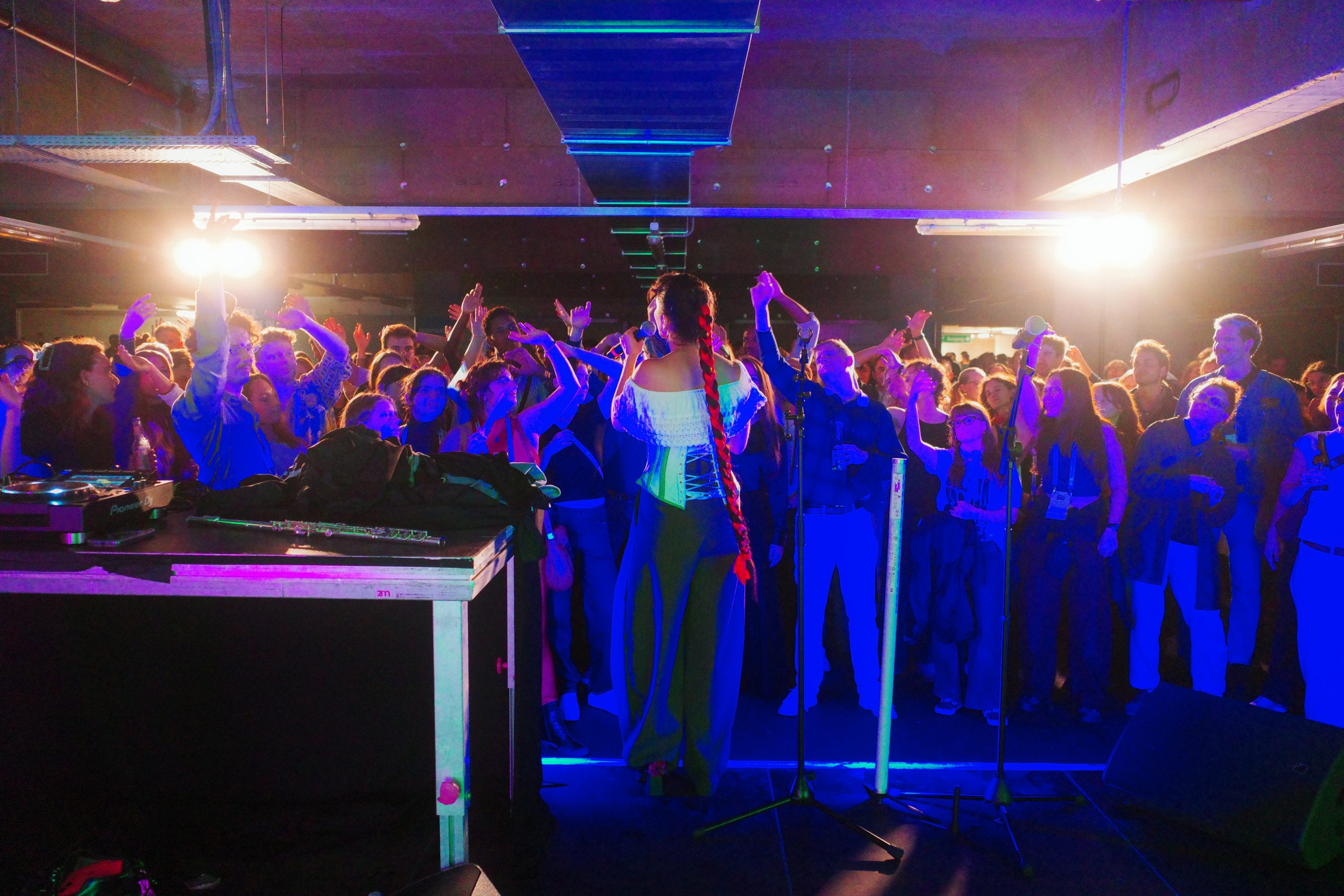
That is why we are setting out on the road. These first months will be spent on the move as we will carry Europe’s Futures Initiative across the continent and beyond, in a European tour of ideas: city after city, so that ideas travel faster than they do today and more people take part in making them. We will go to the obvious capitals, and to the places that rarely make the itinerary yet decide as much as any capital, because that is where we mean to have an effect. Each stop will bring one more point of view into the conversation, and more people that recognizes itself on the map of a shared project.
Here is what else to expect from us. Speed, first: we want to read what is happening in Europe quickly and act on it, so that initiatives arrive as the continent’s agenda takes shape, rather than long after. Analysis, too: policy proposals that put ideas on the table before the debate has caught up with them, and that lend weight to the ones we believe deserve to win. And, when it matters, campaigns. We don’t want to be shy about what we stand for, and we will argue for it out loud, in the rooms where Europe’s decisions are made and across the continent.
There is also this space itself, which will grow from the movement of people, ideas and conversations that EFI is bringing together across Europe. It will become a magazine of ideas, provocations and visions about Europe’s future, shaped by the community that gives EFI its life. Some of that work will appear here in written form. Some will travel through our videos, conversations, newsletters and social channels, translated into formats that can reach people beyond the usual European circles. Because the future of this continent cannot be written by a few, or understood by a few. It has to be made legible, shared and imagined together.
We are new, and much of what we will become is still ahead of us. That is part of the point. Europe’s Futures Initiative is also an experiment in how a community can think in public, tell stories across borders and contribute, in its own way, to changing the continent it belongs to.
Thinking about Europe’s future with the persistence it demands is work for many, and it will grow stronger with every person who joins. The conversation is open, and there will be many ways to take part: joining the initiatives we will bring across the continent, contributing ideas, adding a perspective we have yet to hear. The first is the simplest: reach out, to us or to our members, spread across Europe and already at work.
Europe is changing faster than its old language can explain, and faster than its old maps can orient us. EFI exists to find new ones for a future that is still open.